Exponential Moving Average (EMA) Strategy
By Samantha Baltodano
TL;DR:
The exponential moving average reacts quicker to current price changes than other moving average strategies because it places a greater weight on the most recent price data.
What Is the Exponential Moving Average (EMA)?
The exponential moving average (EMA) is a moving average strategy that puts more weight on the most recent price data. In placing greater weight on more recent security prices, it reacts faster to price changes than other moving average strategies.
EMA Formula
EMA(today) = (PriceToday (Smoothing1+Days)) + (EMA Yesterday (1-Smoothing1+Days))
There are many choices when deciding on a smoothing factor, the common choice is 2. If the smoothing factor is increased then more recent prices have a greater influence on the EMA.
Also, it’s important to note that shorter periods will be more responsive to price changes than longer periods. This is because of the multiplier in the formula. For example, a 21-day EMA will place a 9% weight on the most recent price, whereas a 100-day EM will place a 1.9% weight on recent prices.
- Multiplier for 21-day EMA = 21+21 = 0.09
- Multiplier for 100-day EMA = 21+100 = 0.19
EMA Buy and Sell Triggers
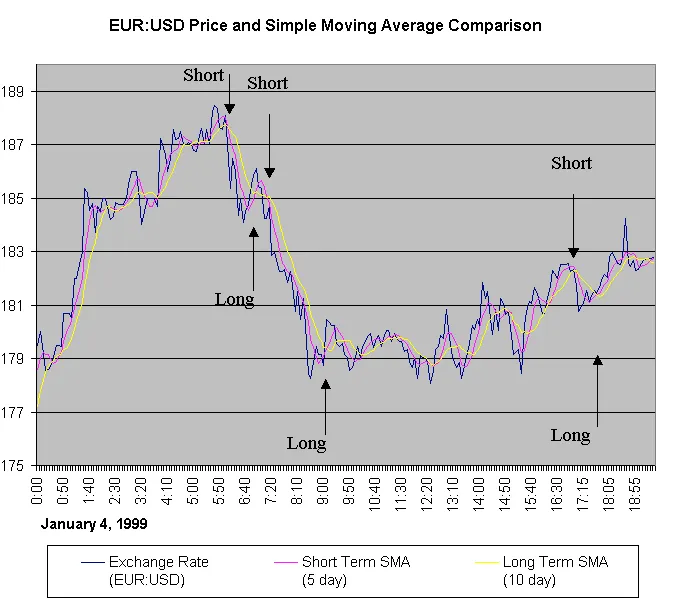
Like other moving average strategies, you have three options for deciding when to sell with the EMA. If you are relying on the EMA alone then you might use trend following or reversal.
Trend following:
- Sell when price falls below the EMA
- Buy as price crosses above the EMA
For reversal, the opposite is true:
- Buy when price falls below the EMA
- Sell as price crosses above the EMA
Other investors may choose to combine the EMA with another strategy to determine buy and sell triggers.
Summary
- EMA is a weighted moving average strategy. It places greater weight on a security’s more recent prices, allowing it to respond more quickly to trend changes.
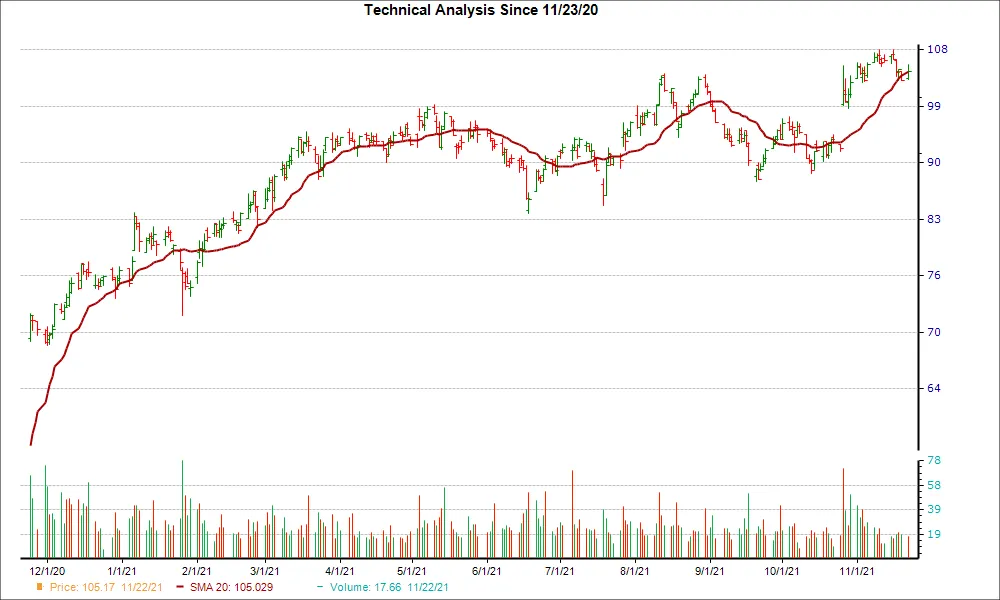
- EMA, like all moving average strategies, is a lagging indicator. This means they are not necessarily predictive of future prices, they simply highlight the trend that is being followed by the stock price.
- It’s important to note that none of the moving averages is a better indicator than each other. Although EMA is a more accurate representation of recent price changes and helps identify trends quicker, it also experiences more short-term fluctuations than an SMA strategy. The optimal moving average depends on the investor.
- When calculating the first EMA value, you will use the SMA as the previous period's EMA in the first calculation.
Exponential Moving Average is just one of many strategies that Archaide automates. For a full list of strategies and studies available click here.
Like what you read? Check out the rest of our content!