Double Exponential Moving Average (DEMA) Study
By Samantha Baltodano
TL;DR:
The Double Exponential Moving Average (DEMA) is a technical indicator used to reduce lag and noise in the results produced by a traditional moving average. It's used to spot trends in the price of a stock or asset.
It uses two exponential moving averages to eliminate lag, and the calculation involves multiplying two times the EMA and subtracting a smoothed EMA.
When the price of an asset is above the DEMA and rising, it confirms an uptrend, while when it's below and falling, it confirms a downtrend.
What Is The Double Exponential Moving Average Study?
The Double Exponential Moving Average (DEMA) is a technical indicator devised to reduce the lag in the results produced by a traditional moving average. Technical traders use it to lessen the amount of "noise" that can distort the movements on a price chart.
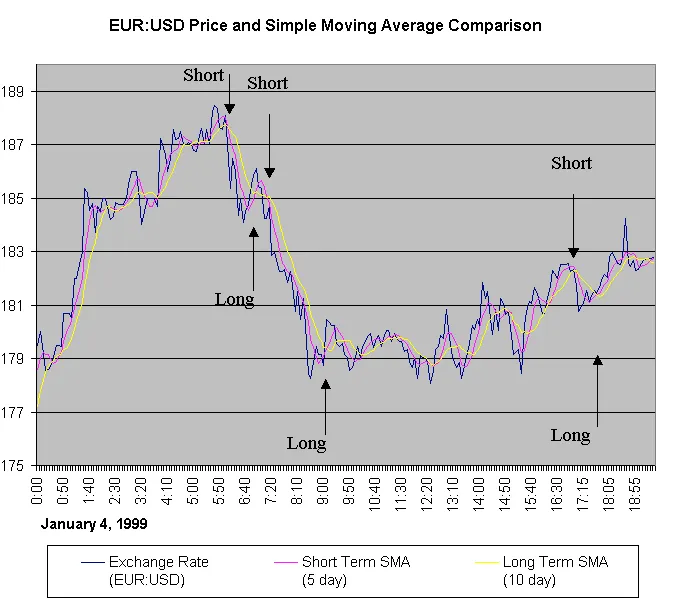
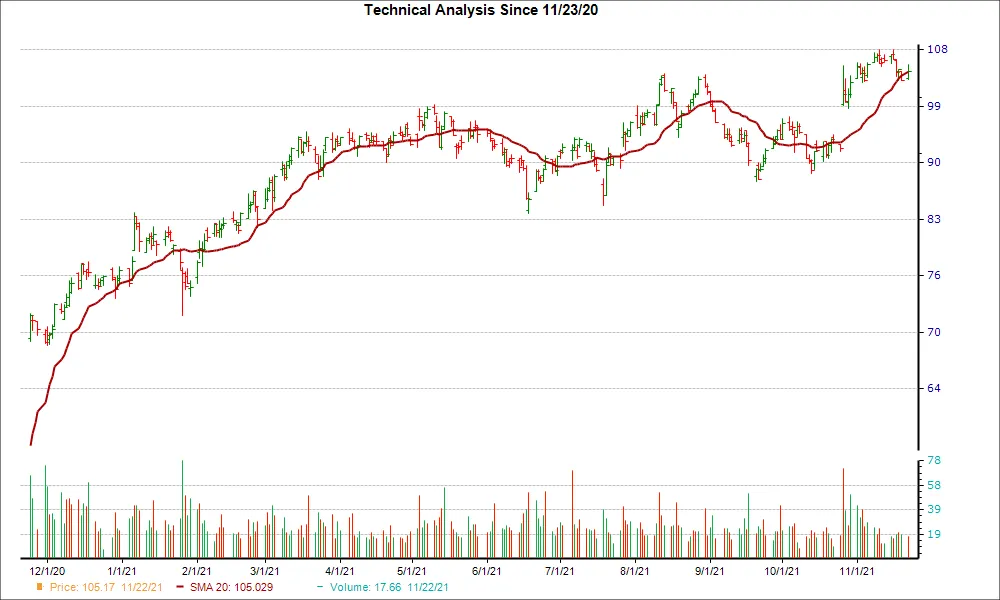
Like any moving average, the DEMA is used to indicate the trend in the price of a stock or other asset. By tracking its price over time, the trader can spot an uptrend—when the price moves above its average, or a downtrend—when the price moves below its average. When the price crosses the average, it may signal a sustained change in the trend.
As its name implies, the DEMA uses two exponential moving averages (EMAs) to eliminate lag in the charts.
Formula & Calculation
DEMA= (2 × EMAn) − (EMA of EMAn)
where:
N = Look-back period
There are just four steps to this calculation:
- Choose any lookback period, such as five days, 15 days, or 100 days.
- Calculate the EMA for that period. This is EMA(n).
- Apply an EMA with the same lookback period to EMA(n). This produces a smoothed EMA.
- Multiply two times the EMA(n) and subtract the smoothed EMA.
What Does the Double Exponential Moving Average Tell You?
Although the indicator is called a double exponential moving average, the equation does not rely on using a double exponential smoothing factor. Instead, the equation doubles the EMA but then cancels out the lag by subtracting a smoothed EMA.
The DEMA is used most often by day traders and swing traders. However, long-term investors may be better off using a standard moving average.
How to Interpret the DEMA + Trade Signals
Reading the DEMA is straightforward. When the price of an asset is above the DEMA, and the DEMA is rising, it helps confirm an uptrend in price. When the price is below the DEMA, and the DEMA is falling, that helps confirm a downtrend.
As noted above, some traders display two or more DEMAs with different look-back periods on a single chart. Trade signals could be generated when these lines cross.
For example, a trader may buy if a 20-period DEMA crosses above a 50-period DEMA, or sell when the 20-period crosses back below the 50-period.
What Is the Difference Between a Simple Moving Average and DEMA?
The double exponential moving average may be best described as a "smoothed" simple moving average. A standard moving average displays a lag time that increases with the amount of time being charted. The double exponential moving average seeks to shorten that lag time to a consistent level. Overall, it gives the trader an earlier warning of a change in the direction of an asset's price.
Double Exponential Moving Average (DEMA) and the Triple Exponential Moving Average (TEMA)
As the names imply, the double EMA includes the EMA of an EMA. The triple EMA (TEMA) has an even more complex calculation, involving an EMA of an EMA of an EMA.
The goal is still to reduce lag, and the triple EMA has even less lag than the double EMA.
Test The Double Exponential Moving Average Study
Great news!
You can back test this exact strategy on historical data for any of your favorite symbols using TradingView.
This strategy has already been built and all you have to do is log in and take it for a spin. You can access this indicator here.
If you’re new to back testing and to TradingView, don’t worry. I created a step-by-step guide you can follow to begin testing the Double Exponential Moving Average Study.
Summary
- The double exponential moving average (DEMA) is a variation on a technical indicator used to identify a potential uptrend or downtrend in the price of a stock or other asset.
- A moving average tracks the average price of an asset over a period to spot the point at which it establishes a new trend, moving above or below its average price.
- Some traders see a flaw in the standard moving average: It has a lag time that increases with the length of the period being charted.
- The DEMA addresses this flaw, reducing lag time in the indicator.
- The DEMA, therefore, has a stronger filter for the "noise" of irrelevant market action that can distort charted results.
Double Exponential Moving Average is just one of many studies that Archaide automates. For a full list of strategies and studies available click here.
Like what you read? Check out the rest of our content!