What is an Oscillator?
By Samantha Baltodano
TL;DR:
The oscillator is a technical analysis tool that plots upper and lower bands around two extreme values. It then constructs a trend indicator that fluctuates within the bounds of these bands. A security is considered overbought or oversold as it approaches the upper and lower bounds.
What Is an Oscillator?
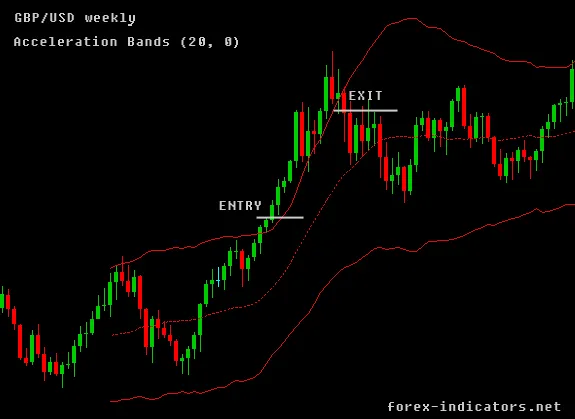
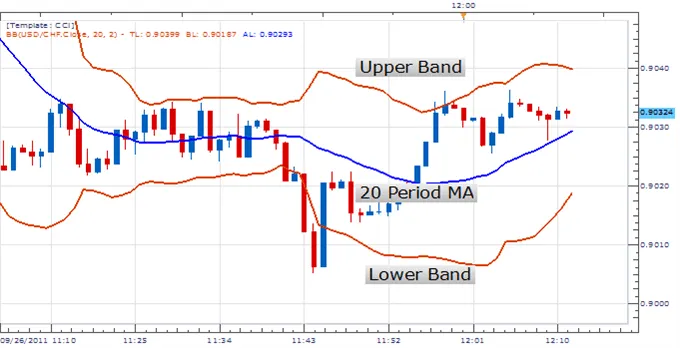
The oscillator is a technical analysis tool that plots upper and lower bands around two extreme values. It then constructs a trend indicator that fluctuates within the bounds of these bands.
As this trend indicator approaches the bounds it signals that a security is overbought or oversold.
When the trend indicator approaches the upper band, this is believed to be an indicator that the security is overbought.
When the trend indicator approaches that lower band, this is thought to indicate the security is oversold.
- -
Let’s put this in simple terms:
Apples are sold at your local farmer’s market between $0.50 and $3. Since we have our minimum and our maximum values, we’ll set an upper band at $3 and a lower bound at $0.50
Every day we decide to track the price of an apple, so now we have a line that tracks daily price and that floats between these upper and lower bands.
If you’re a reasonable person (and I’m sure you are) you’d rather buy that apple at $0.50 then you would at $3. Let’s also say that you value that apple at $1.25, so you likely would not be willing to pay any more than that for a single apple - fair enough!
Now, every day, rain or shine, the farmer needs to sell all his apples so they won’t go bad. On rainy days, less people show up to the farmers market, so the farmer prices his apples lower than usual to get rid of his inventory. Let’s say the price on that day is $1.
It’s raining a bit harder than usual, so, unfortunately, the farmer goes home with a few bags of apples leftover
The following day, there’s a thunderstorm in town. The farmer is desperate to get rid of these apples that no one is buying and is willing to sell apples cheaper than ever. Apples are on sale for $0.60.
Wow! That’s cheaper than ever and a whole $0.65 less than you think that apple is worth. You decide to take the risk of being struck by lightning and head to the farmers market to buy as many apples as you can afford.
If that apple was a financial security, it would be considered oversold.
Now on the other hand, let’s say there’s a local apple pie bakeoff happening on a cool autumn day. That sounds delicious! Everyone in town wants to show off their grandma’s apple pie recipe and bring honor to their family (this is a very proud town).
The farmer knows this and also knows that everyone who is competing wants apples. He sets the price of one apple at $2.50.
Oof, that’s pricey, but surprisingly, the people are still buying and the farmer runs out of apples.
You’re smart though, and know that those apples are seriously overpriced. They’re being overbought which sets the price higher than the actual value of an apple.
- -
How do Oscillators work?
Oscillators are used in addition to a technical indicator to make trading decisions. Oftentimes, financial analysts will use oscillators when they can’t find a clear trend in a company’s stock price.
When an investor uses an oscillator, they first need to pick two values; then, placing the tool between the two, the oscillator oscillates, creating a trend indicator. Investors will then use the trend indicator to understand the market conditions of that security.
Again, when the investor sees that the oscillator is moving towards the higher predetermined value, they will read this is a sign the security is overbought. This means more people are buying the security so the price is going up as supply and demand head towards a new equilibrium.
In the reverse case, when that oscillator heads towards the lower band, investors see this as a signal the security is oversold. This would mean that there are more people willing to sell their stock, than there are people willing to buy at a high price. So the sell price is lowered as investors desperately try to cut their losses.
Mechanics of an Oscillator
Oscillators are measured on a scale between 0-100%. Meaning the full distance between the bands is 1, or 100%.
While the market trades between this predetermined range (between the upper and lower bands), the oscillator will follow price fluctuations.
It indicates an overbought signal when it goes over 70 to 80% of the predetermined total price range. This signals a selling opportunity.
An oversold condition exists when the oscillator falls below 30 to 10%. This is considered an opportunity to buy.
These signals are valid only as the price of the security stays within the upper and lower bands. When breaks outside of these bands the signal can be misleading.
Analysts will consider a price breakout as a resetting of the range where the current sideways market is bound or as the beginning of a new trend.
During these price breakouts, the oscillator will likely stay in the overbought or oversold conditions for extended periods of time
Oscillators are best suited for sideways markets and are considered more effective when used in addition to a technical indicator that can identify market trends and range bounds.
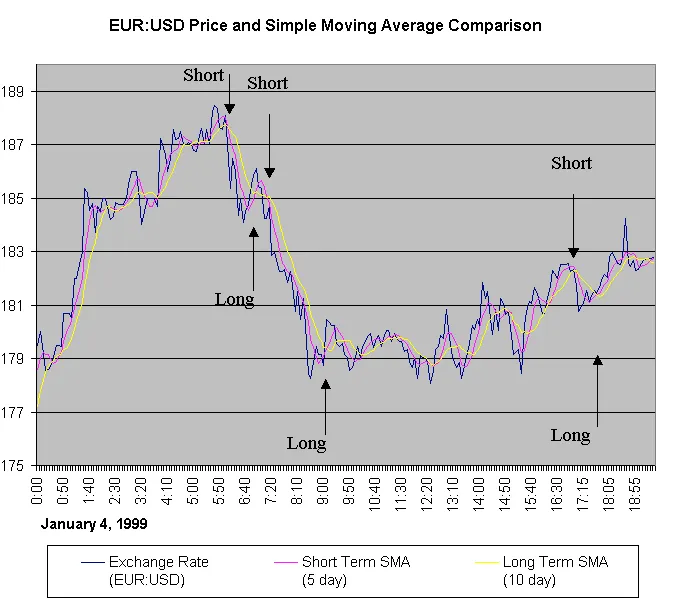
For example, the moving average crossover indicator may be used to determine if a market is in trend or not. When it’s determined that the market is not in a trend, the signals of the oscillator become much more useful and effective.
Summary
- Oscillators are momentum indicators - its fluctuations are bounded by an upper and lower band.
- When oscillators approach and cross the bands, it is an indicator that the security is overbought or oversold.
- Oscillators are often combined with moving average indicators to signal trend breakouts or reversals.
This is just one of many tools that is used by Archaide. For a full list of strategies and studies available click here.
Like what you just read? Check out the rest of our content!